PlanetCockroach.com
Learn how to stop the encroach of the roach!


Know Your Cockroach Anatomy

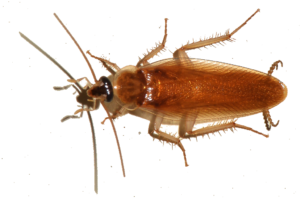
Cockroach anatomy isn't something that many of us want to think about, but if you are afraid of a roach bite or you want to know just where to hit, cockroach anatomy is a good thing to know about!  The cockroach may look like a simple, ugly little insect to you but in reality they are quite complex.  If you ever have the opportunity to really look at a roach you will see that they have several different body parts, much like a human has different body parts.

The most notable part of the cockroach anatomy is the skeleton.  Unlike humans, the cockroach skeleton is on the outside if its body.  The cockroach can actually outgrow his skeleton, at which time he molts, or sheds the outgrown skeleton, often referred to as a shell.

While the skeleton is not all that impressive to some, most would be impressed by the compound eyes on the cockroach.  These compound eyes allow the cockroach to see all around its body, to protect it from just about anything!  This compound vision is made possible by more than 2,000 individual lenses.  When you consider that the human eye has just one lens, the cockroach eye becomes quite remarkable.  While the cockroach can see very well, it's worth noting that a cockroach cannot see in red light!

The cockroach has six legs, all of which are primed for an extra sensory organ.  There are little hairs on the legs of each cockroach that allow him or her to have a very extra sensitive touch.  The legs work in conjunction with the antennae, actually.  The antennae give the roach an extra sense of smell so that they cannot only find great places to live and feed, but also find other cockroaches.  Male cockroaches actually have specially adapted antennae that allow them to sniff out a female.

If you've ever seen the two little hairs on the rear portion of a cockroach, you've actually been checking out his or her cerci.  The cerci are sort of like a warning system or motion detector for the cockroach, so that nothing can sneak up on the roach.  Even a slight breeze or someone or something moving ever so slightly will warn the cockroach to run away and hide.

The mouth of a roach is quite remarkable, as well.  The mouth of a cockroach cannot only taste, it can smell as well!  The cockroach mouth is different than a human mouth as well because the roach chews in a side-to-side motion instead of an up and down.  The salivary glands work along with the mouth, creating spit to aid in the breaking down of food.

As you can see, the cockroach anatomy is much more exciting than you may have first thought.  Remember when you go to smash one, don't just hit the head portion of body, because it's a cockroach fact that they can live for a good deal of time with out their heads!

For more information about the different types of roaches have a look at the cockroach identification article.

Google
Web www.planetcockroach.com